Home/Work/Redesigning Take Therapy's onboarding from 7 steps to 3
HealthcareMobile AppUX RedesignHealthcare

Redesigning Take Therapy's onboarding from 7 steps to 3

A 6-week end-to-end UX redesign of Take Therapy's mobile booking flow.

Year
2026
Role
Lead UX/UI Designer
Duration
6 weeks
Platform
iOS · Android
Methods
Interviews · Usability Testing · IA · Design System
Tools
Figma · Maze · Notion · Loom
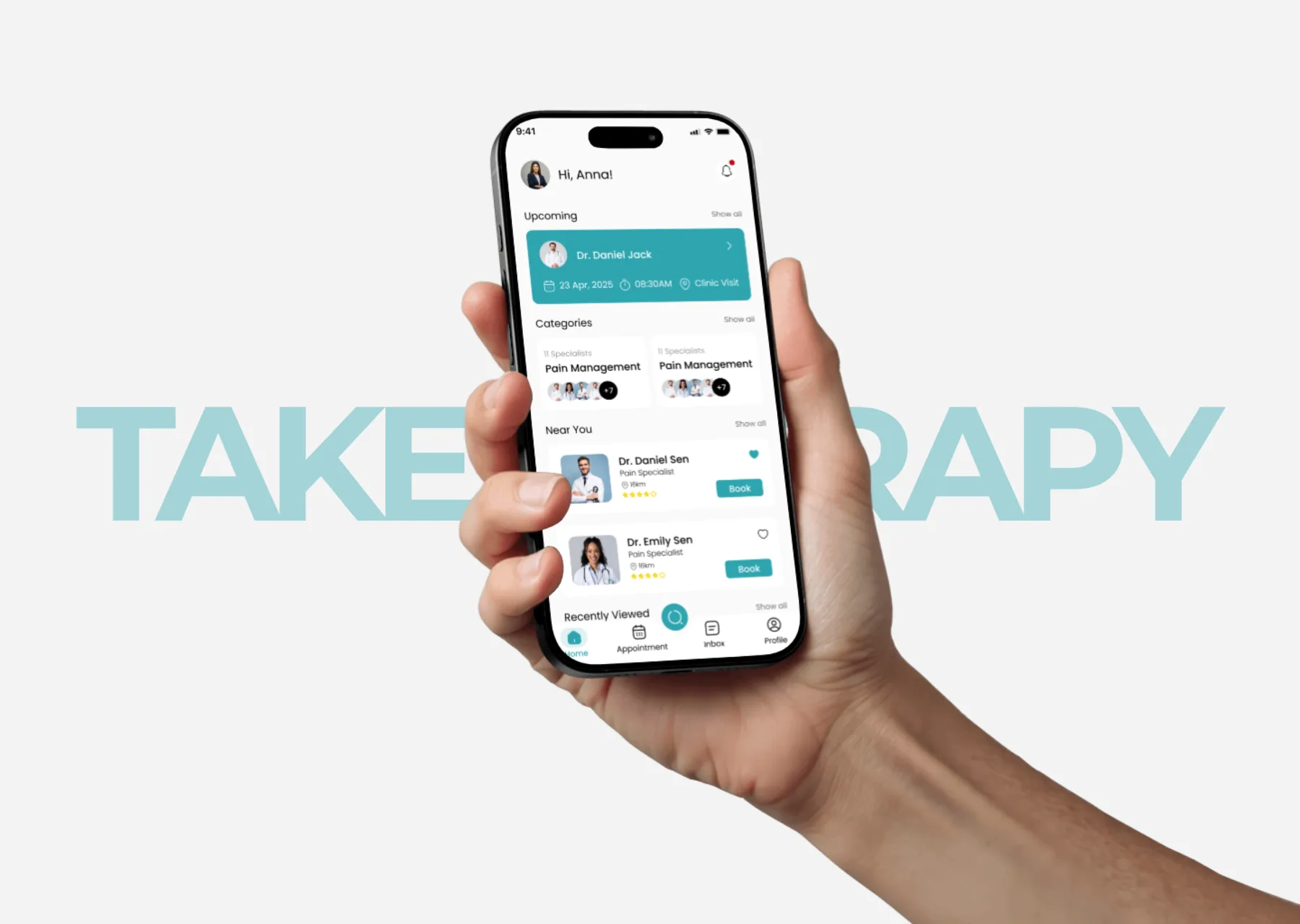
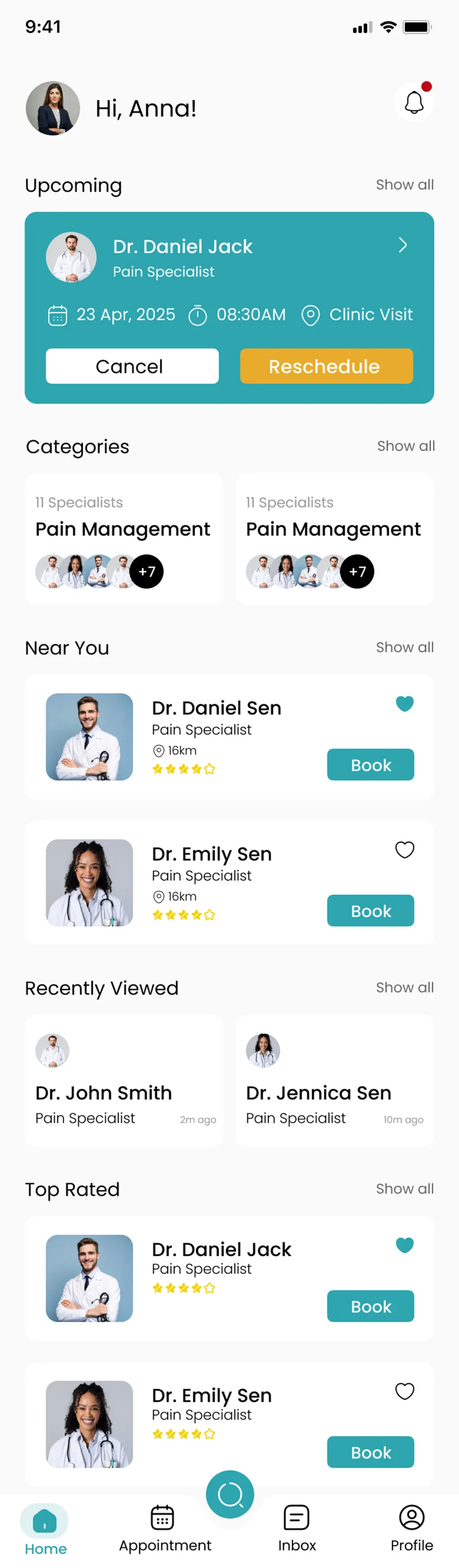
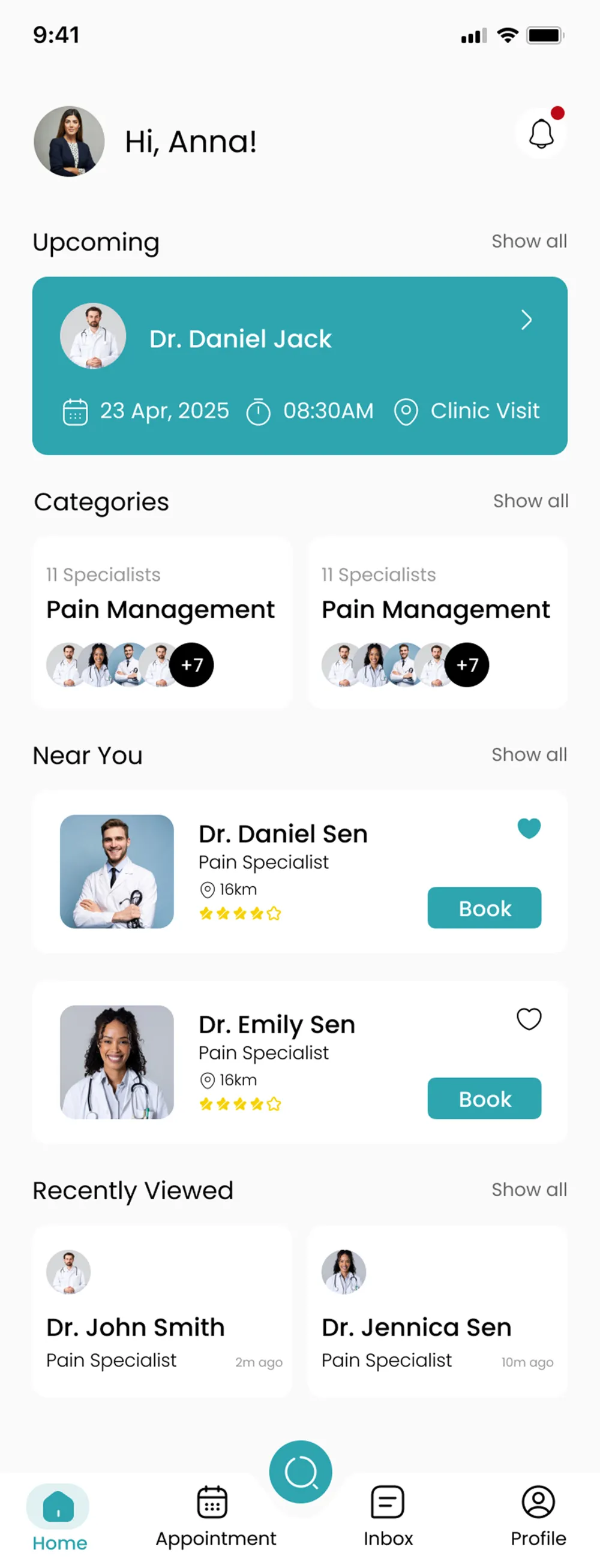
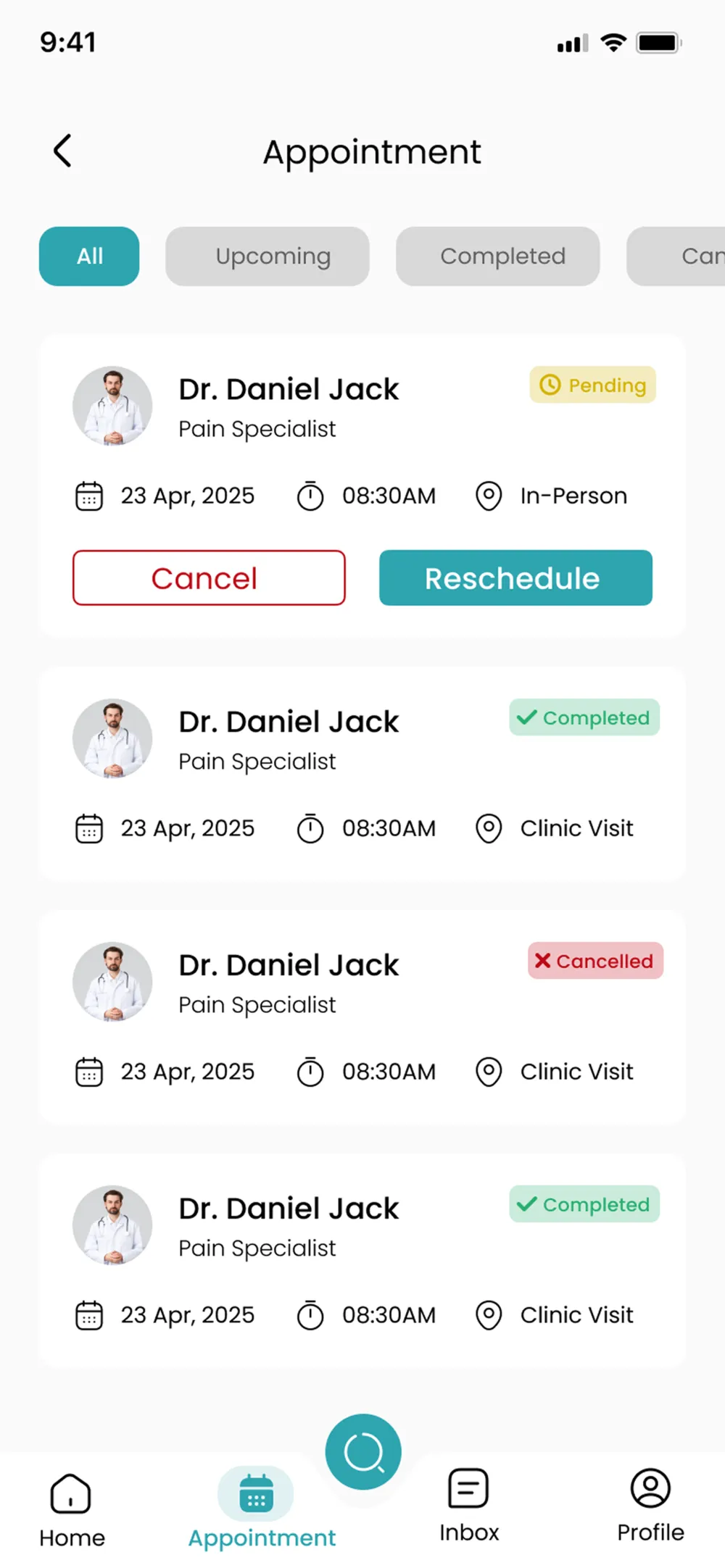
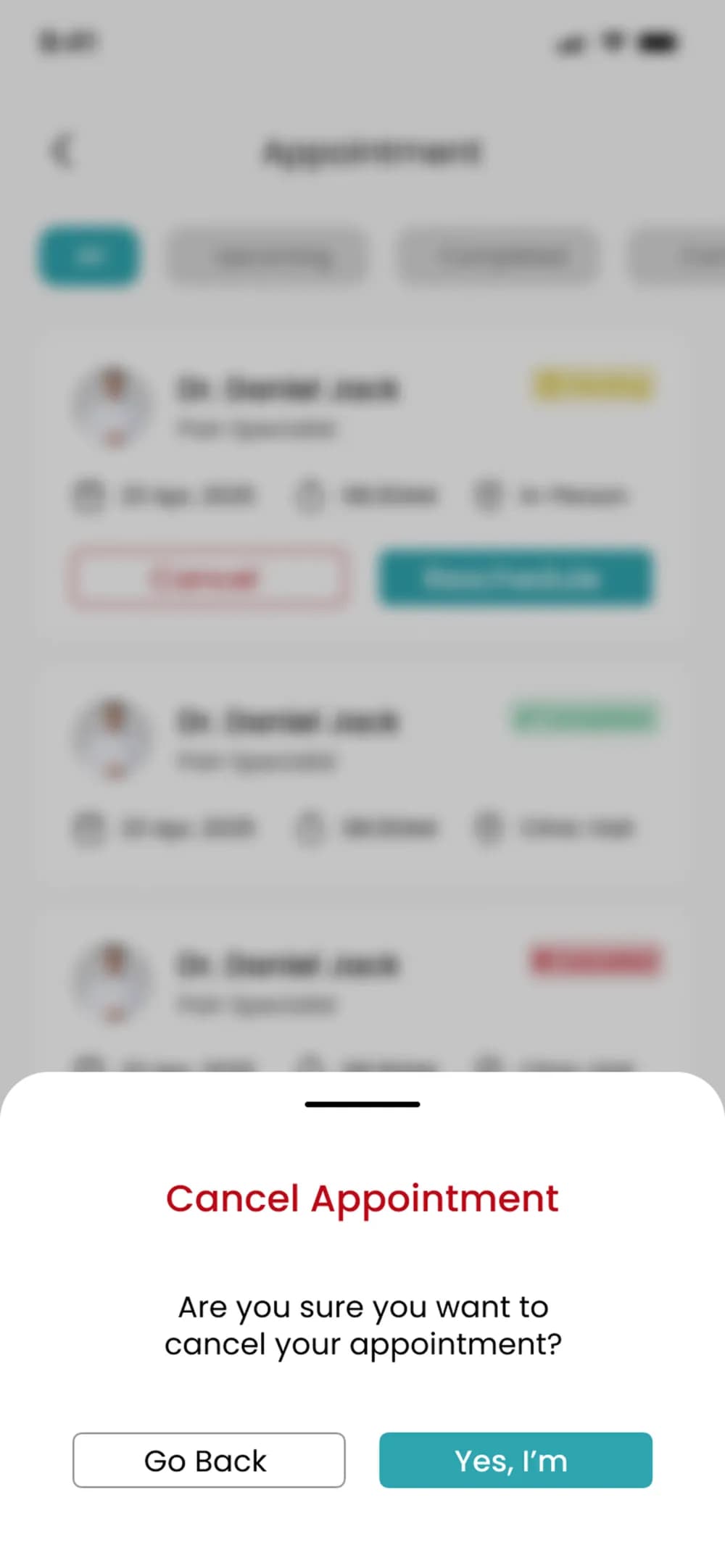
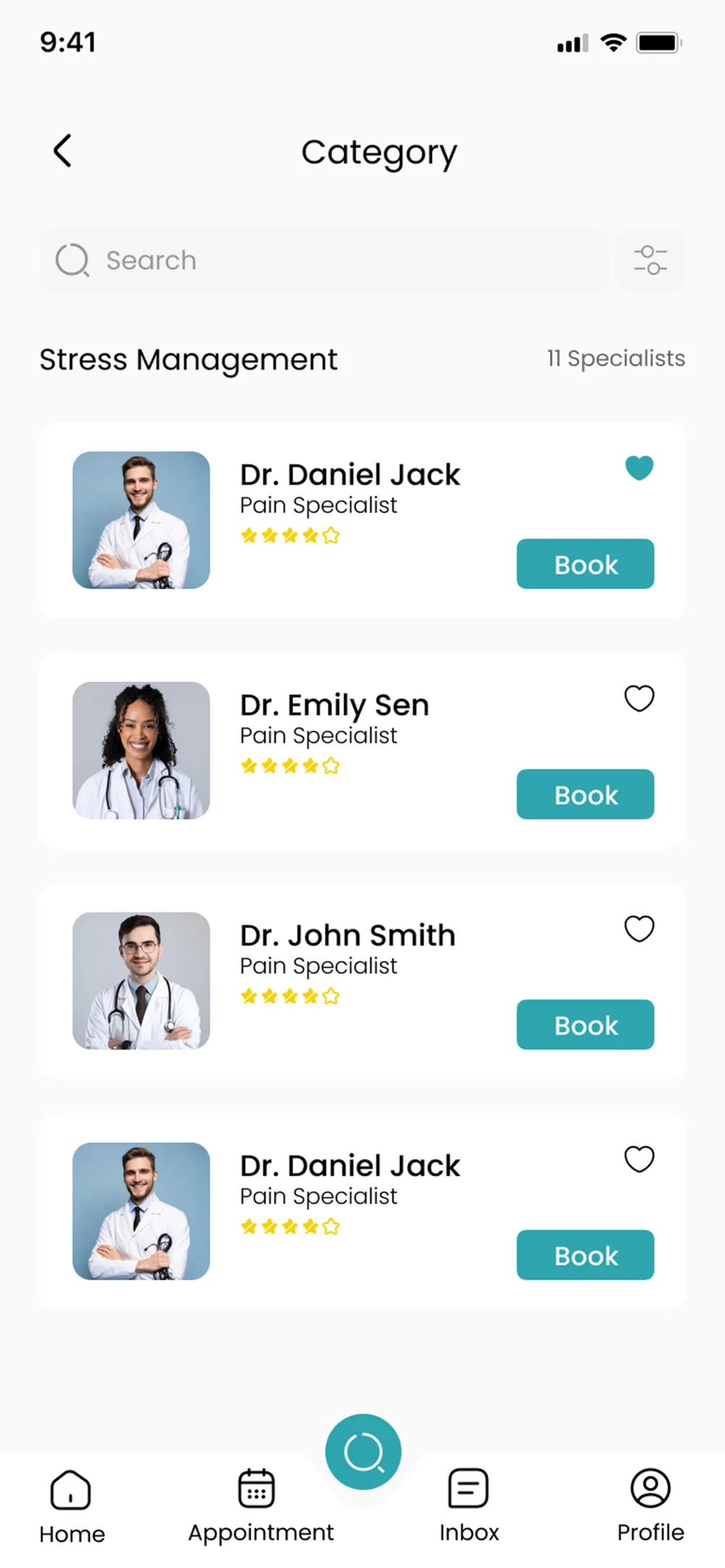
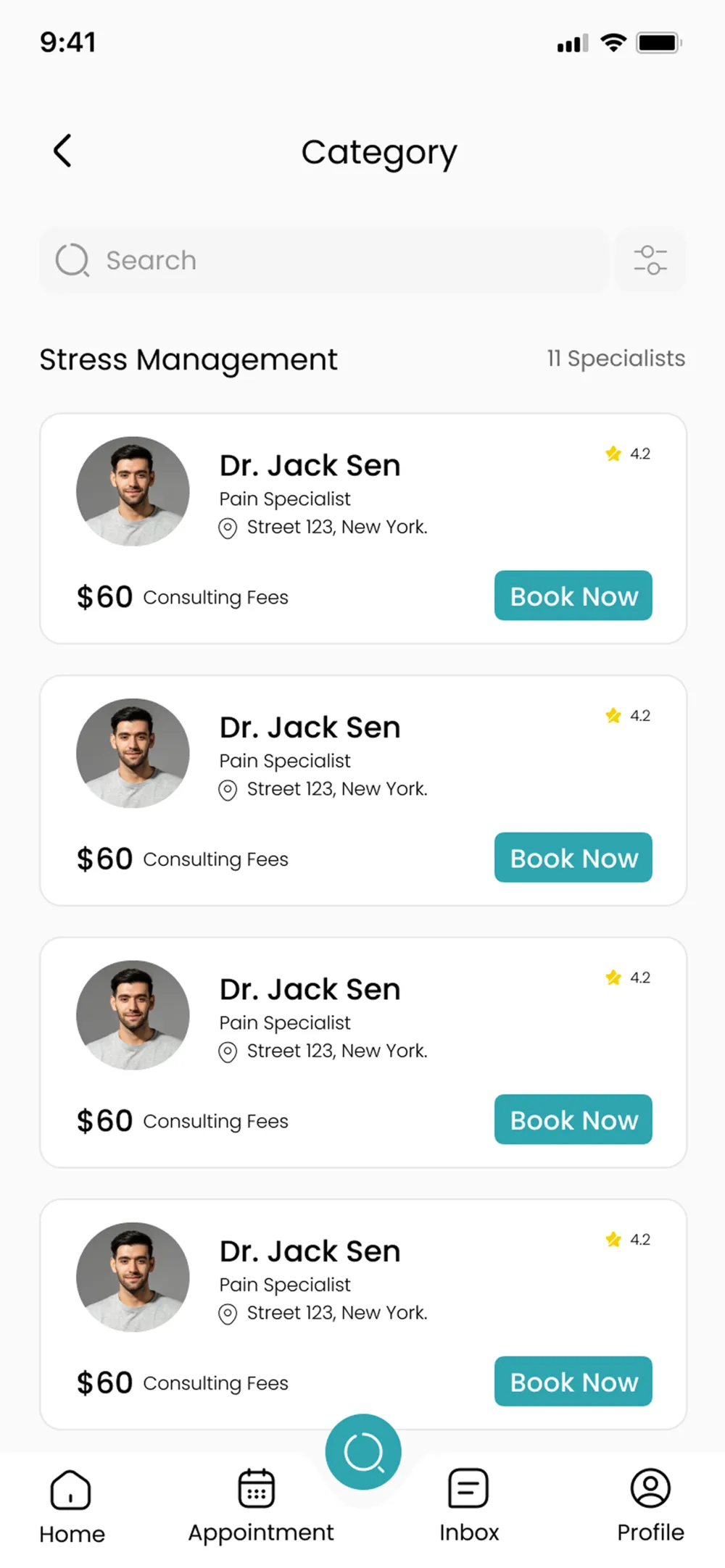
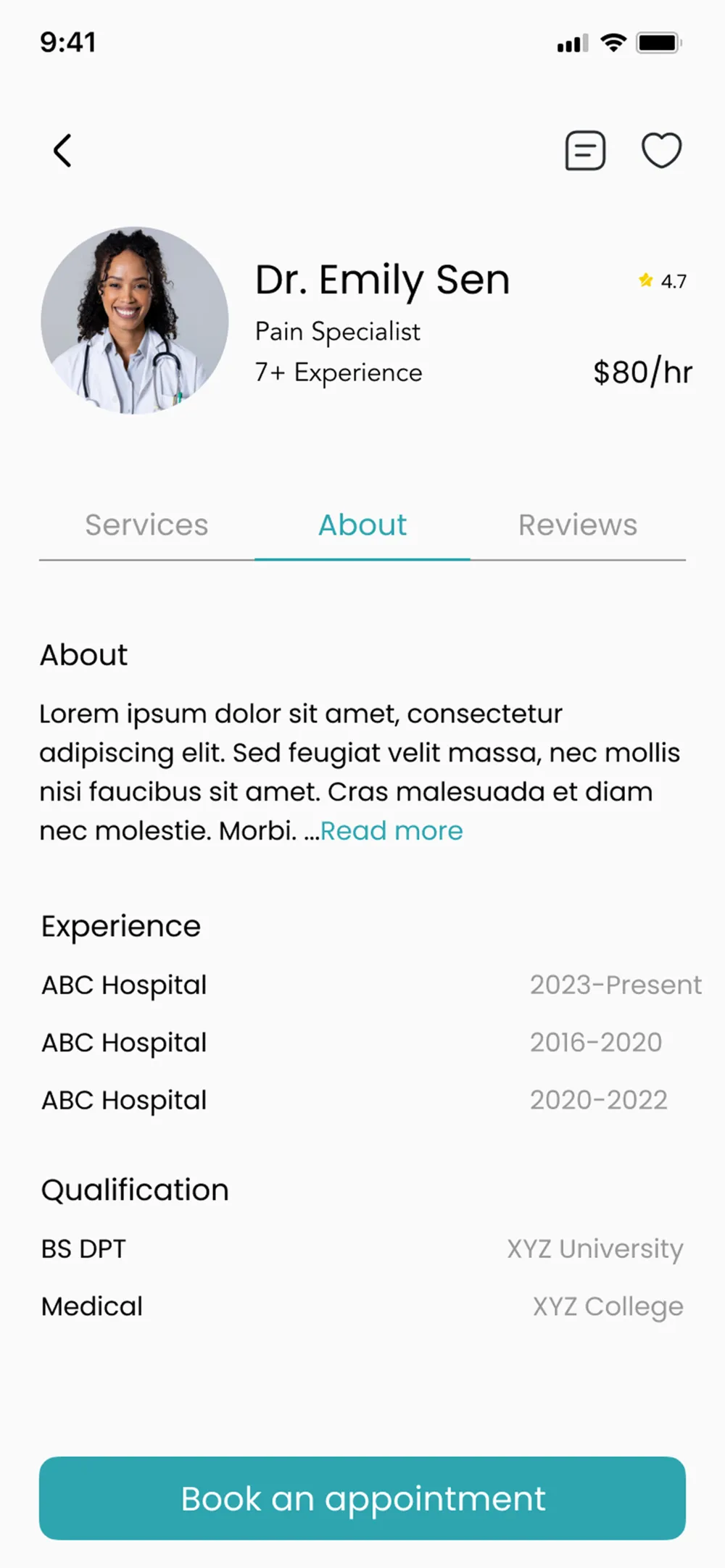
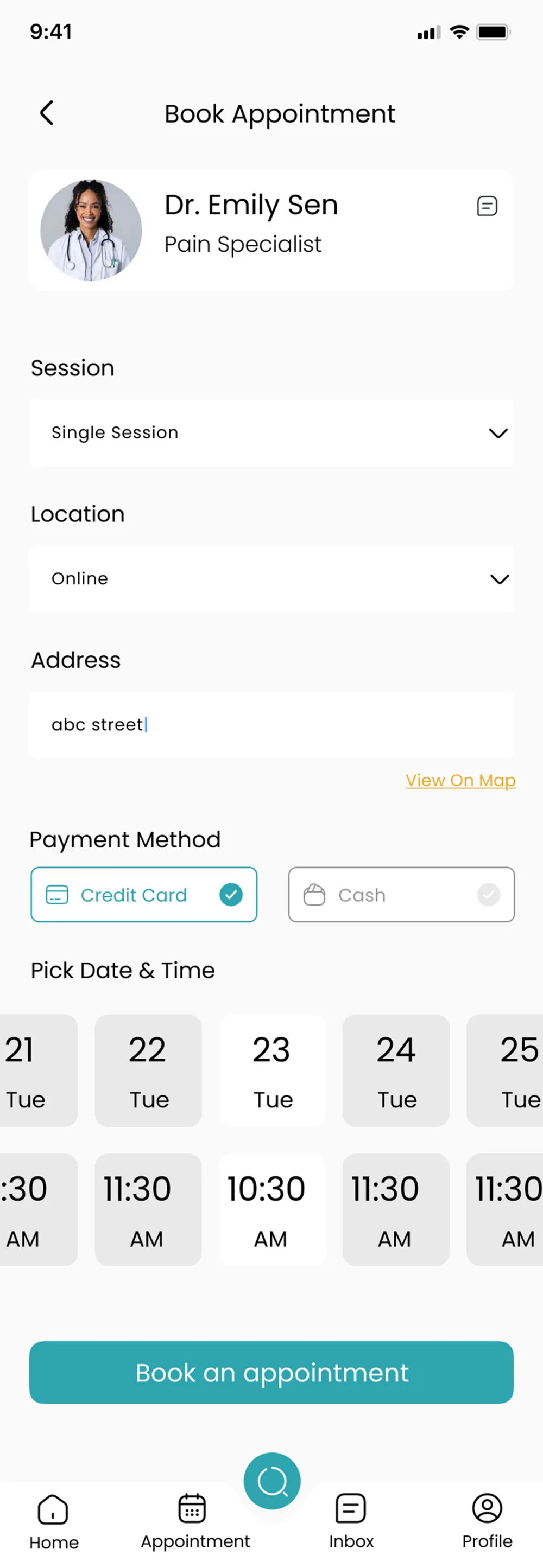
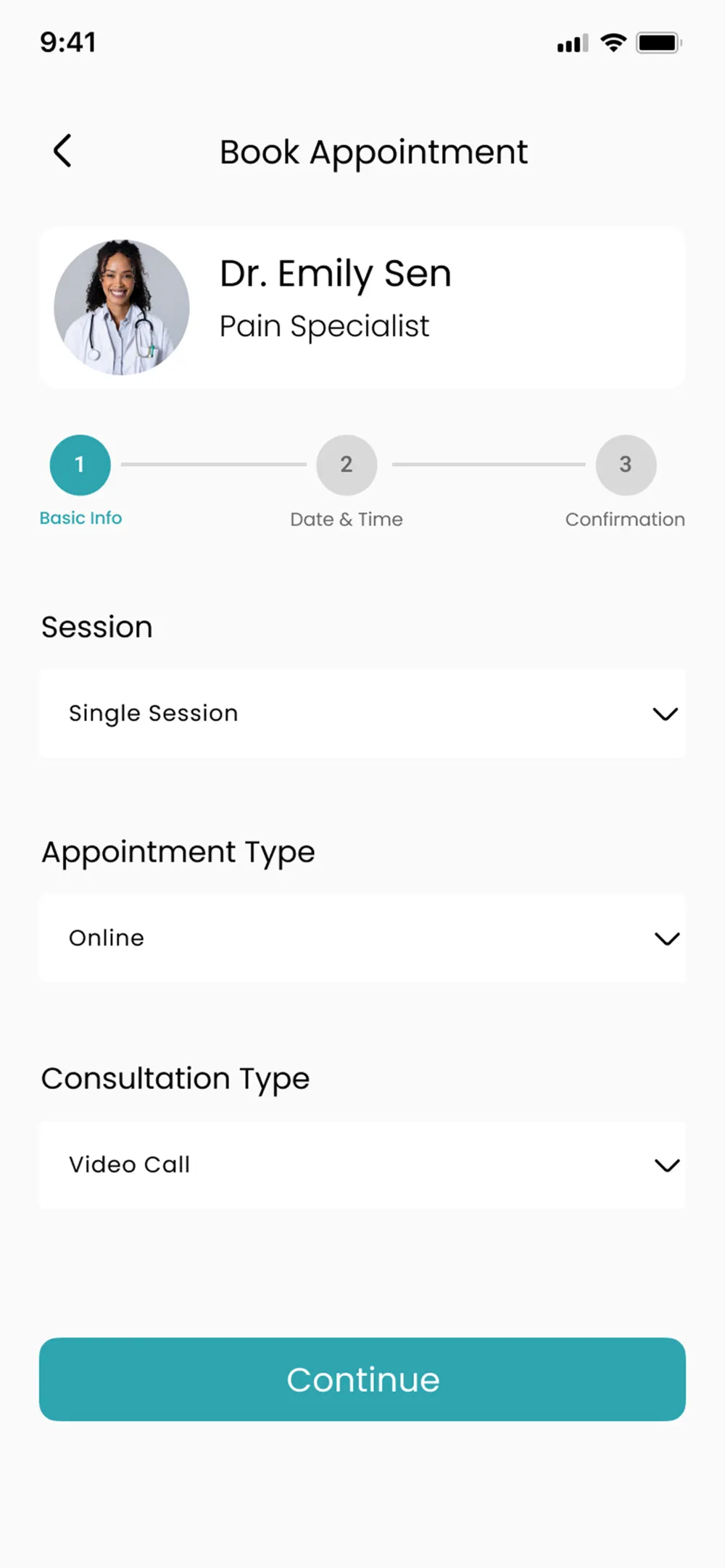
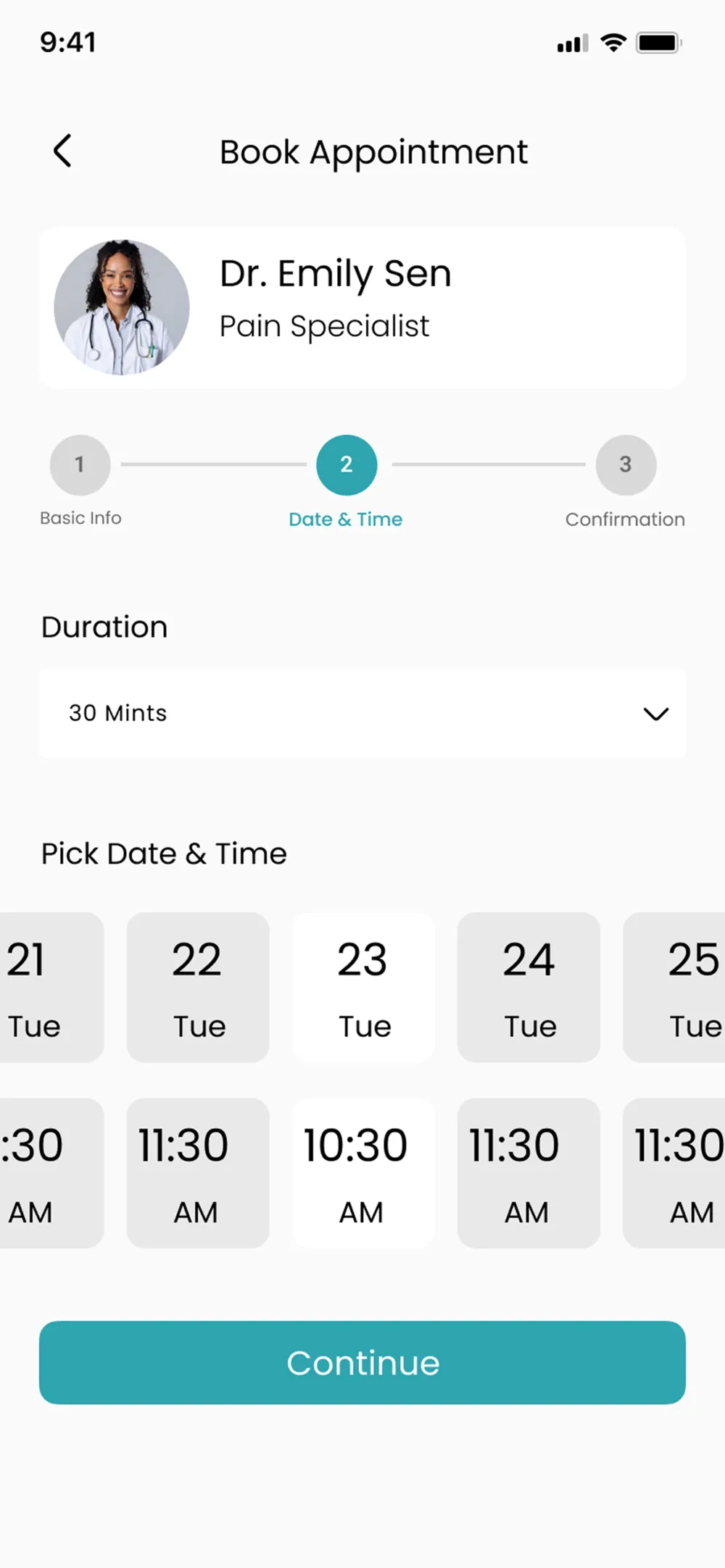
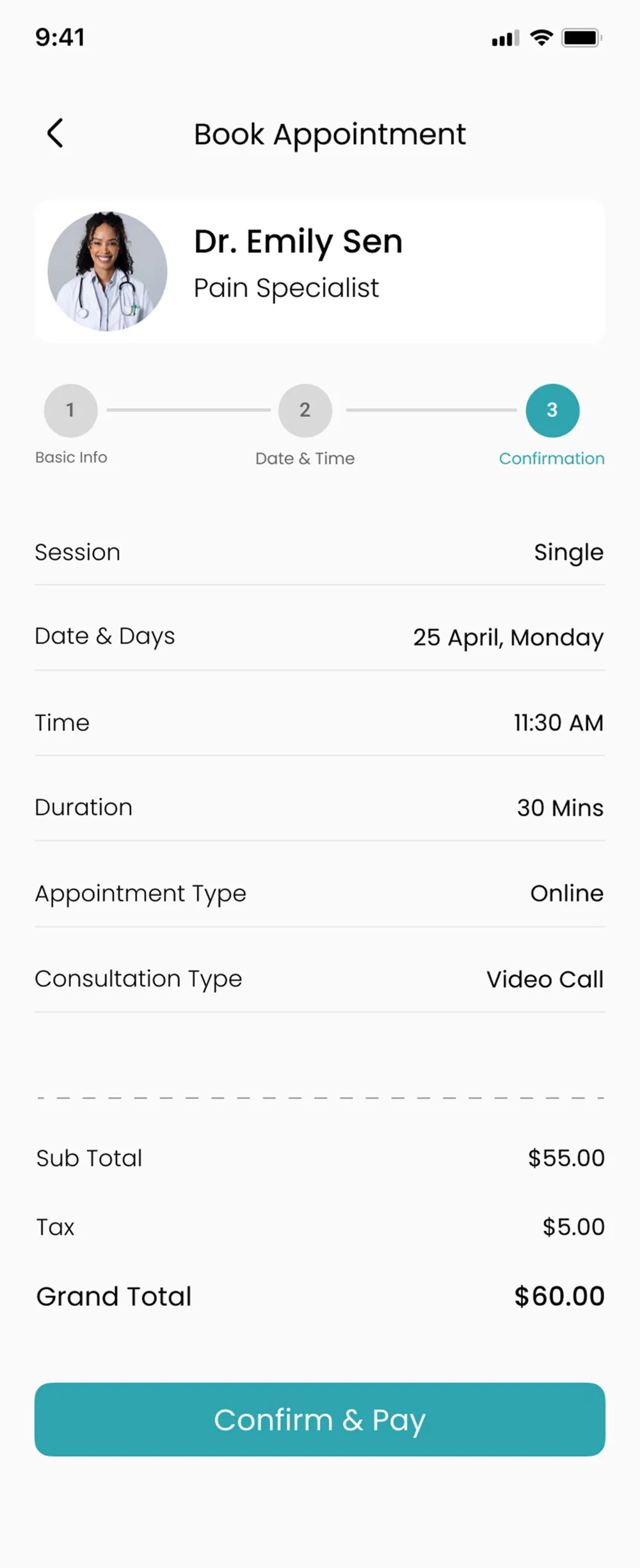
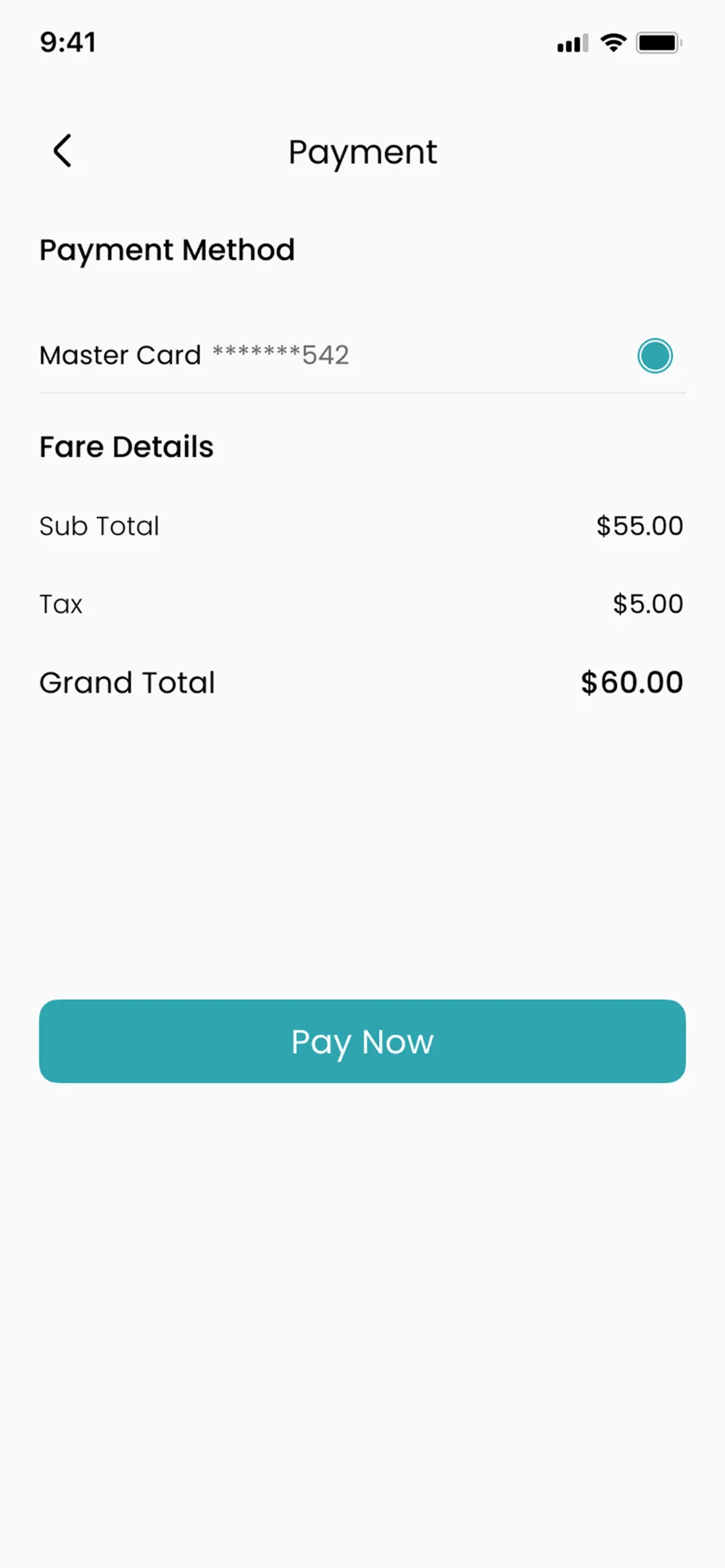
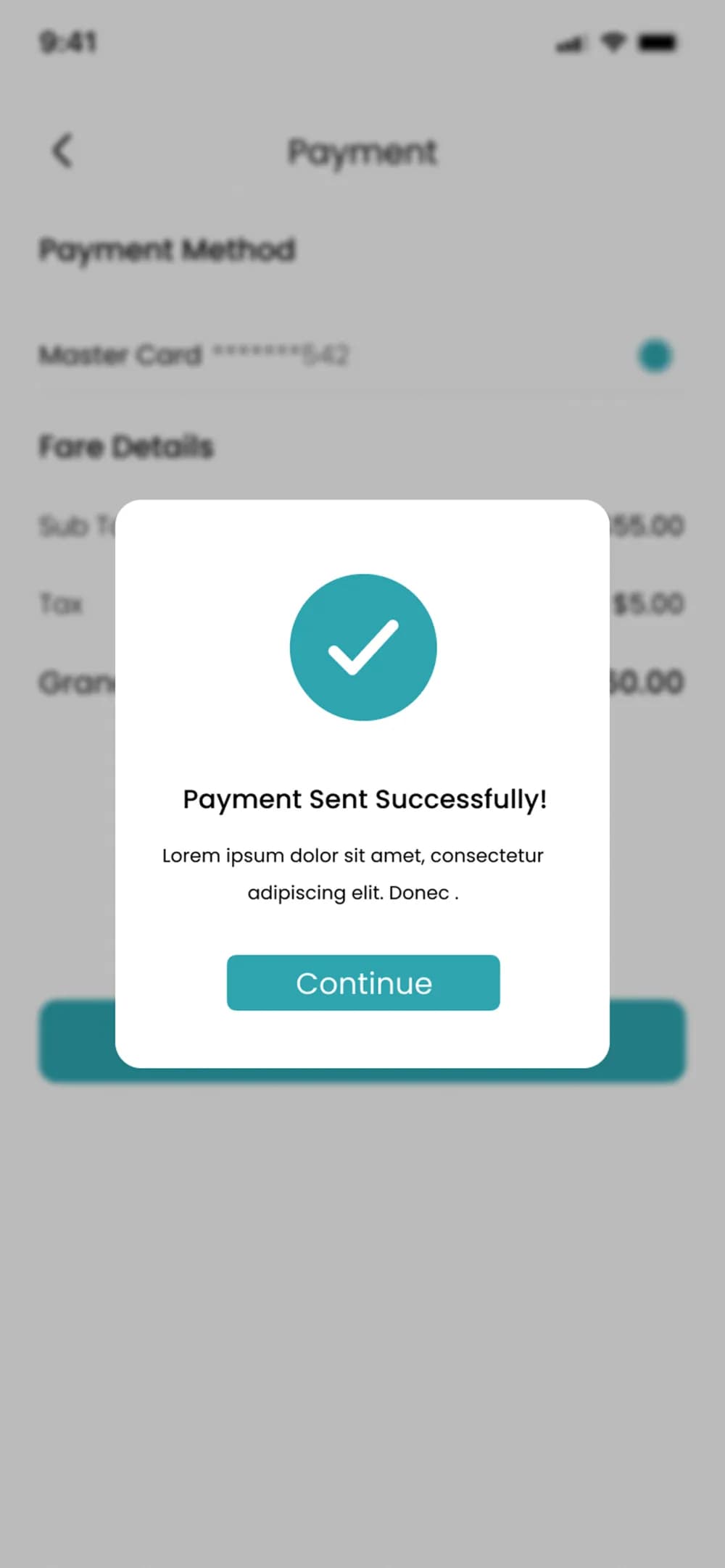
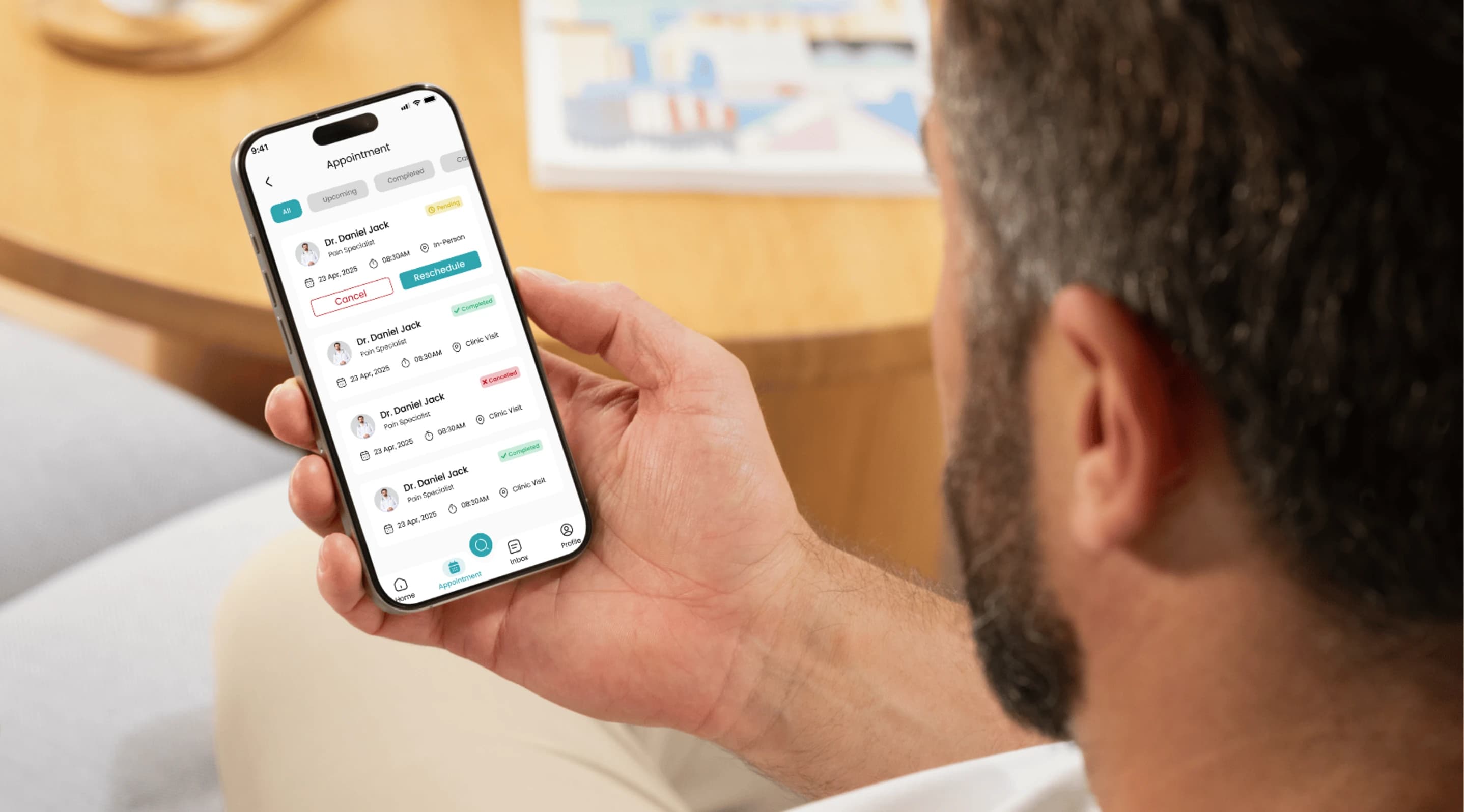
Take Therapy app redesign hero — three iPhone screens
01Overview

The TL;DR.

Problem
First-time users dropped at 34% completion in a 7-step onboarding before booking their first session.
Approach
Reframed onboarding as progressive disclosure — collect only what's needed to book; defer the rest.
Impact
Booking flow cut to 3 steps. Completion +62%. Week-2 retention +38%.
02Context

The business problem before the design problem.

Take Therapy is a digital therapy platform serving ~50,000 monthly active users across the US and UK, matching clients with licensed therapists for video sessions. They'd hit product-market fit; their growth was acquisition-led but unit economics were getting worse — CAC was up 34% YoY while activation lagged.

The CMO and Head of Product agreed: we have to fix activation before we spend more on top-of-funnel. The team's hypothesis was that onboarding was too long. I was brought in to validate that hypothesis with real research, redesign the flow, and ship within 6 weeks before the next paid-acquisition push.

03Role & Team

What I owned, and who I worked with.

  • Owned:Research methodology, interview synthesis, IA, all visual + interaction design, design system contributions, usability testing, dev handoff.
  • Co-owned with PM:Problem framing, success metrics definition, scope decisions, sprint planning.
  • Influenced:Clinical safety review, copy, post-launch experimentation roadmap.
  • Not in scope:Therapist-side dashboard, billing logic, anything outside the booking flow.
Team
M
Me (Masfa)
Lead UX/UI Designer
A
Ayesha K.
Product Manager
B
Bilal R.
Senior iOS Engineer
D
Daniel T.
Android Engineer
S
Dr. Sara W.
Clinical Director (review)
04Process

Six weeks, four phases, Double Diamond.

Discover
Week 1
User research

14 interviews, analytics review, support ticket synthesis.

Week 2
Competitive audit

4 competitors mapped on onboarding speed + friction.

Define
Week 3
HMW + IA

Problem reframed, principles set, sitemap rewritten.

Develop
Week 4
Concepts + wireframes

3 concepts explored, 1 chosen for high-fi.

Deliver
Week 5
Hi-fi + system

Final designs, 4 new tokens, 6 reusable components.

Test
Week 6
Test + handoff

Moderated UT with 8 users, 2 iterations, dev handoff.

05Discover · Research

Three insights that reframed the problem.

The team's hypothesis was "onboarding is too long." Research surfaced something more specific: it wasn't length, it was asking the wrong things at the wrong time.

5.1 Methodology

Qualitative
User interviews
  • Participants 14
  • Recruited via support email + UserTesting
  • Criteria first 7 days post-signup
  • Format 30-min remote (Zoom)
  • Synthesis Affinity diagram, 6 themes
Quantitative
Analytics & support audit
  • Drop-off funnel (Mixpanel) 90 days
  • Support tickets reviewed 340
  • Session recordings (Hotjar) 52
  • Existing NPS responses ~600
  • Insurance set-up rate baseline 41%

5.2 Primary personas

Sarah · 29 · NYC
First-time therapy seeker · pay out-of-pocket
"I just want to talk to someone today. Why are you asking me about my deductible?"
Goals
Book a session fast · See real therapist photos · Skip paperwork
Frustrations
Insurance forms · Slow onboarding · Generic matching
James · 41 · Manchester
Returning user · uses insurance benefit
"I already filled all this out last time. Why does it forget who I am?"
Goals
Rebook same therapist · Reuse details · Insurance straightforward
Frustrations
Re-entering data · Therapist no longer available · Slow auth

5.3 Current-state journey map · Sarah

01
Sign up
02
Medical history
03
Insurance
04
Preferences
05
Book session
Action
Creates account with email + password.
12-field health questionnaire.
Enters insurance, waits for verification.
Picks therapist gender, modality, language.
Picks slot & confirms.
Emotion
😊 Hopeful
😐 Wary
😞 Annoyed
😔 Overwhelmed
🙂 Relieved
Pain points
Low friction.
Why now? Why so much?
41% drop here.
Decision paralysis.
Most users who reach here convert.

5.4 Competitive audit

[ BetterHelp · screen ]
BetterHelp
Quick quiz upfront feels low-stakes.
Insurance entirely missing — out-of-pocket only.
[ Talkspace · screen ]
Talkspace
Insurance check is async (email).
Wait time of 24 hours kills urgency.
[ Headspace Care · screen ]
Headspace Care
Defers preferences until after session 1.
Onboarding feels generic / impersonal.
06Define

From insight to a How Might We.

Problem statement
How might we get a first-time user to a confirmed therapy session

6.1 Design principles

01
Speed over precision

Get them to a session. Optimise the profile later.

02
Progressive disclosure

Defer every question that isn't needed for clinical safety or the booking transaction.

03
Choices, not forms

Pre-filled tappable options beat blank fields. Every screen has fewer than 3 decisions.

6.2 Success metrics — defined upfront

Primary
+25% completion
Baseline: 34% · Goal: 60%+
Secondary
< 90s time-to-book
Baseline: 4:20 median
Guardrail
No drop in safety
Clinical-safety profile completion ≥85%

6.3 Information architecture · before → after

Before
Onboarding
→ Account
→ Medical history (12 fields)
→ Insurance + verification
→ Therapist preferences (4 fields)
→ Modality preference
→ Booking
After
Onboarding
→ Account
→ Concern picker (1 question)
→ Availability + book
After first session
→ Insurance (optional)
→ Full profile (gamified)
→ Therapist preference learning
07Develop · Concept exploration

Three concepts, one shipped.

[ Concept A · linear stepper ]
A · Linear stepper
Felt familiar but still felt long. Steps had progress meter but users said "ok how many more."
CHOSEN[ Concept B · conversational ]
B · Conversational, 3 cards
Wins on perceived speed. Each card is one decision. Felt like texting a friend, not a form.
[ Concept C · single-screen ]
C · Single-screen everything
Felt overwhelming on mobile. Too many decisions visible at once. Killed it after sketch review.

7.1 Iteration timeline · the "Concern Picker" screen

v1
Initial — text input

Killed: Users froze. Open text was the wrong cognitive load.

v2
Iteration — chip selector, 12 options

Killed: Too many choices. Decision paralysis.

v3
Shipped — 6 chips, illustrated

Shipped: 6 distinct concerns covering 92% of intents. Visual cues reduce read time.

08Design System

What I added to the system.

The redesign didn't ship as one-offs. Every new pattern became a reusable component in Take Therapy's Figma library, used by 4 squads after this.

New tokens added (4)
color/accent/warm
#FF7B5B
color/surface/calm
#F2EDE3
color/feedback/safe
#D9E8E2
elevation/card/calm
0 12px 32px rgba(0,0,0,0.04)
Reusable components (6)
ConcernChipGroup
used 3 places
SlotPickerCard
used 5 places
ProgressiveProfileMeter
used 2 places
TherapistMatchCard
used 4 places
UrgencyBanner
used 2 places
EmotionalSpacer
used 6 places
09Deliver · Annotated final designs

The shipped flow, screen by screen.

[ concern picker · final ]
6 chips, illustrated.
Distilled from 12 in usability testing. Covers 92% of first-session intents.
No skip available.
Required for clinical safety routing, so the chip system has to be the right fidelity.
Sticky primary CTA.
Always visible. Reduces uncertainty about "what is next?"
10Usability Test

Eight users. Three scenarios.

Moderated remote testing via Maze + Zoom. Two iterations during the test week — the concern picker dropped from 12 chips to 6 after session 4 when participants kept missing what they actually wanted.

Task scenarios + outcomes
  • Book your first therapy session, paying out-of-pocket.
    8 / 8
  • Reschedule that session for next week.
    7 / 8
  • Add your insurance after the fact.
    6 / 8
Quant results
1:18
Median time-to-book (down from 4:20)
87
SUS score (above industry healthcare avg of 68)
100%
Task-1 completion (was 34% pre-redesign)
0
Severity-1 usability issues uncovered
11Accessibility

WCAG 2.2 AA, end-to-end.

Mental health products carry a duty to be reachable by everyone. Every screen of the new flow passed automated (axe-core) and manual (VoiceOver + TalkBack + Keyboard) audits before merge.

Contrast
AA
Min 4.5:1 body · 7:1 for critical CTAs
VoiceOver
100%
All flows fully navigable via VoiceOver + TalkBack
Tap targets
≥ 44pt
All interactive elements above iOS HIG minimum
Reduced motion
Respected
All animations skip if user has reduced-motion enabled
12Impact

What shipped, and what changed.

3 steps
Down from 7 — booking complete in <90s for median user.
Source: Production funnel, 14-day post-launch
+62%
First-time booking completion rate (from 34% baseline).
Source: Mixpanel, 30-day window
+38%
Week-2 retention from new sign-ups.
Source: Cohort analysis, 60 days
-34%
Drop in support tickets tagged "onboarding."
Source: Zendesk, 30-day window

"Masfa took our most frustrating user flow and made it the part of the app we are proudest of. She does not just deliver screens — she ships product thinking."

[ Client Name ]
[ Role · Take Therapy ] — replace with real attribution
13Reflections

What I would do differently next time.

What worked
  • Defining success metrics in week 3 (not week 6) — let me self-validate decisions without escalating to PM.
  • Running usability tests during design week, not after — caught the chip overload before it shipped.
  • Pairing with the clinical director early — got safety-required questions deferrable without re-litigating in week 5.
What I would do differently
  • Recruit testers for week 1 — I scrambled in week 5. Should have run a 5-person pre-test in week 2.
  • Bring engineering into research synthesis. Bilal's 'we can pre-compute insurance verification' comment in week 5 would have been worth a week earlier.
  • Design the 'what to test next' backlog as part of handoff — left it implicit, not explicit.

13.1 Acknowledgments

Big thanks to Ayesha for ruthless scoping, Bilal & Daniel for engineering pragmatism that shaped what was actually shippable in 6 weeks, and Dr. Sara for review that turned "fast" into "fast and safe." None of this ships without the team.

Related case studies.

All projects
Open for projects · Aug 2026

Got a flow that needs to ship?

Or email me
Based in
Karachi, PakistanUTC+5